


Lung Cancer

Leading the way in Lung Cancer Care: El Portal Comprehensive Cancer Centers are among the West Coast’s experts – we develop a personalized treatment plan that aligns with your unique circumstances and health needs.

Advancements in Lung Cancer Treatment

In the past decade, lung cancer treatment has significantly improved, and at El Portal Comprehensive Cancer Centers (EPCC), we have embraced the most advanced, nationally recognized treatment options available. Every patient receives a personalized treatment plan tailored to the specific type and stage of their lung cancer. When you choose EPCC, you can expect compassionate care provided by an expert team in a community-focused setting.


Your Supportive Care Team, Every Step of the Way

 At EPCC, we believe in the power of teamwork. Your care team will be right by your side throughout your lung cancer journey—beginning with the selection of a specialist, moving through treatment, and continuing with ongoing support as you embrace life as a cancer survivor. Our dedication to your health is unwavering.

How is Lung Cancer Diagnosed

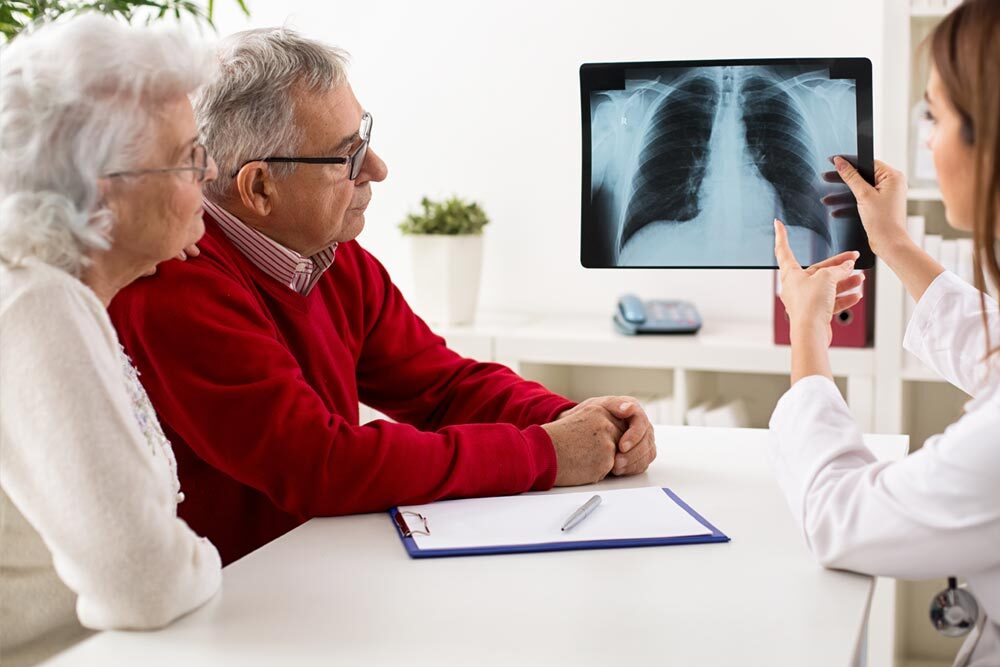
The path to effective treatment begins with an accurate diagnosis. Understanding the tests involved in determining type, stage, and whether the disease has spread to other areas of the body is essential.

Support for Newly Diagnosed Patients

If you’ve recently received a lung cancer diagnosis, the EPCC team is here to support you every step of the way. We offer access to advanced treatment options and resources designed for you and your loved ones.

Chemotherapy and Radiation Therapies

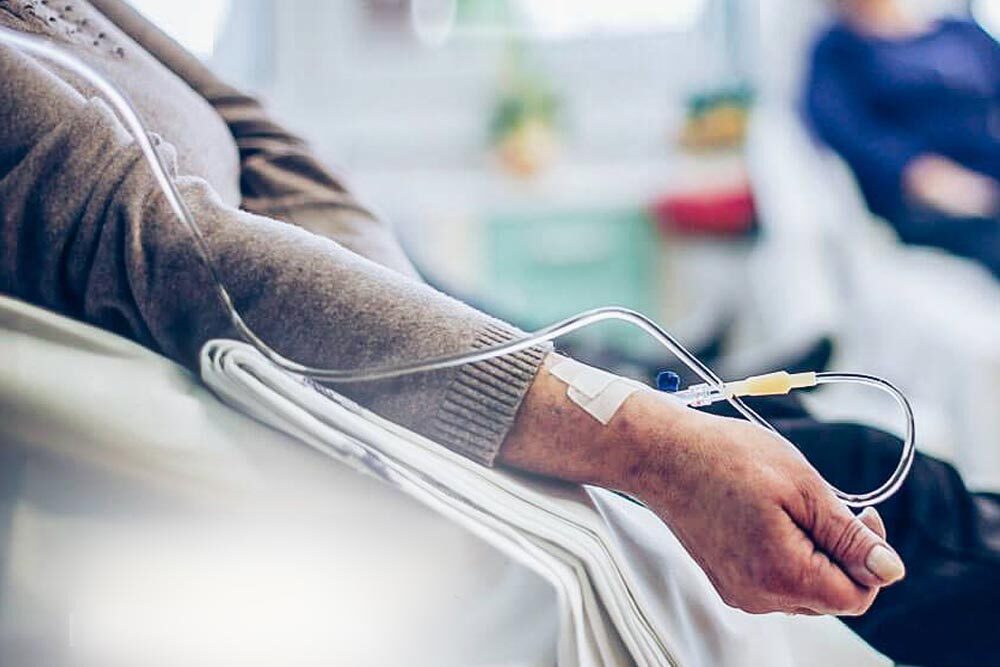
Chemotherapy utilizes powerful medications to halt the growth of cancer cells.Then there is External Radiation Therapy or Internal Radiation Therapy.

Advanced Technologies Treatment Options

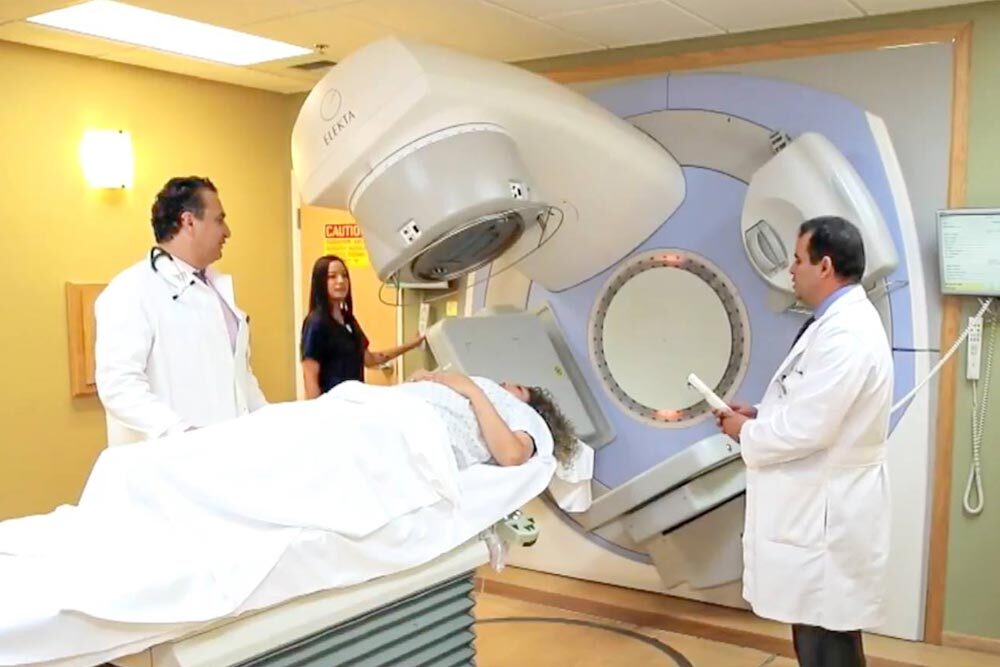
At EPCC, we utilize cutting-edge external beam radiation therapies to enhance treatment effectiveness while minimizing damage to surrounding healthy tissue.

Cancer Treatments for Small Cell Lung Cancer by Stage

Small cell lung cancer (SCLC) is classified into two categories: limited and extensive stage. The limited stage reflects cancer confined to one lung or one side of the body, while extensive stage indicates that cancer has spread to both lungs, lymph nodes, or other areas.

Limited Stage  In the limited stage, surgery is typically recommended to remove the tumor, but this scenario is less common as SCLC is often diagnosed at a more advanced stage. For patients who are healthy enough to undergo the surgery and cope with recovery, chemotherapy is usually administered following the surgical procedure to aid in further eliminating the cancer. Radiation therapy may also be applied to reduce the risk of cancer spreading to the brain.

Extensive Stage  For extensive SCLC, the cancer is too widespread for surgery or radiation to effectively address it. Consequently, chemotherapy and immunotherapy are usually the primary treatment modalities. In certain instances, radiation may be targeted specifically at the brain to prevent cancer cells from spreading to that area. Laser therapy can also provide relief for patients experiencing breathing difficulties associated with the cancer.

At El Portal Comprehensive Cancer Centers, our dedicated team is here to support you through each stage of your lung cancer journey, helping to develop a personalized treatment plan that aligns with your unique circumstances and health needs. 

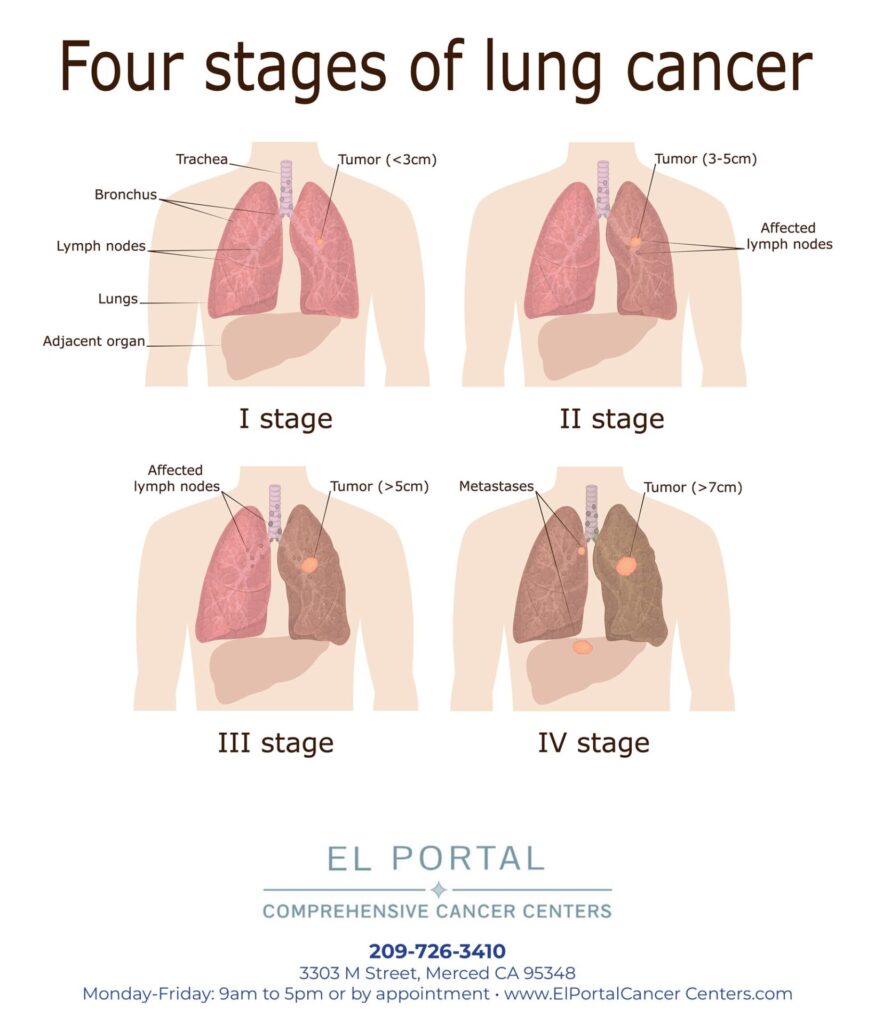
Four Stage of Lung Cancer diagram

“Your care is our priority, and together, we will navigate this journey with compassion and all of our  expertise.”
— El Portal Comprehensive Cancer Centers Team

Diagnosing Lung Cancer

How is Lung Cancer Diagnosed?

The path to effective treatment begins with an accurate diagnosis of lung cancer. Understanding the tests involved in determining lung cancer type, stage, and whether the disease has spread to other areas of the body is essential.

Lung Cancer Detection and Diagnosis

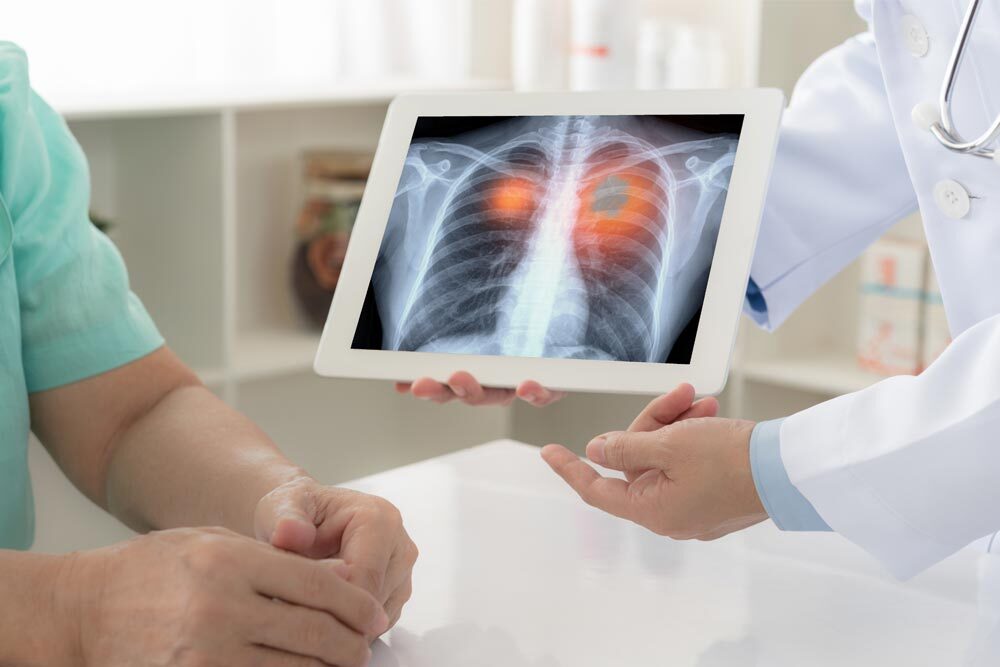
Early detection is key to successfully treating lung cancer. This is why it is critical for smokers and former smokers to have annual lung screenings, as symptoms often do not manifest until the cancer has reached an advanced stage.

Tests Used for Lung Cancer Diagnosis

A variety of tests help in detecting, diagnosing, and staging lung cancer, as well as in understanding whether the cancer has metastasized to other parts of the body. A biopsy remains the most definitive method for diagnosis, involving the collection of a small tissue sample for laboratory testing. Your doctor will consider several factors when selecting the appropriate diagnostic tests, including the size and location of the suspected cancer, your symptoms, overall health, and prior test results.

Common diagnostic tests include:

  • Chest X-ray:Provides images of the organs and bones in the chest.
  • CT Scan:Offers detailed cross-sectional images of the chest, abdomen, and brain, often with a contrast dye.
  • MRI:Utilizes magnets and radio waves to create detailed images of internal structures.
  • PET Scan:Detects malignant cells by using radioactive glucose, highlighting areas of increased activity.
  • Radionuclide Bone Scan:Identifies cancer cells in the bones through a small injection of radioactive material.


Specific Diagnostic Procedures

Procedures to confirm the diagnosis of lung cancer may include:

  • Fine-Needle Aspiration (FNA) Biopsy:Targets abnormal lung tissue to collect samples for testing.
  • Thoracentesis:Removes fluid to check for cancer cells in the space surrounding the lung.
  • Sputum Cytology:An examination of mucus from the lungs for cancer cells.


Molecular Testing for Non-Small Cell Lung Cancer

Genetic testing is critical for understanding mutations within the cancerous tissue that may respond to targeted therapies. Biomarker testing, such as PD-L1 evaluation, can inform immunotherapy options.


Support for Newly Diagnosed Patients

If you’ve recently received a lung cancer diagnosis, the EPCC team is here to support you every step of the way. We offer access to advanced treatment options and resources designed for you and your loved ones.

Personalized Lung Cancer Treatment Plans

Each treatment plan is individualized based on the type and stage of lung cancer as well as your overall health. Our lung cancer care team collaborates closely to offer the best protocols and recommend a comprehensive treatment plan tailored specifically for you.

Understanding Your Treatment Options

Having open conversations with your oncologist is crucial. We want to ensure you fully comprehend your lung cancer treatment plan, the expected timeline, and how we will monitor its effectiveness. Our lung cancer specialists at EPCC are committed to helping you feel comfortable and confident in your treatment decisions, working alongside you to develop a plan suited to your unique situation.

Together, we can take meaningful steps toward effectively managing lung cancer and improving your quality of life.

Expert Lung Cancer Treatment, Close to Home

At El Portal Cancer Centers, we understand that a lung cancer diagnosis can be a daunting experience. Fortunately, many treatment options are available, and we are dedicated to tailoring these solutions to meet your individual needs and preferences. Our approach is grounded in the specific type and stage of your lung cancer, ensuring that you receive the most effective care possible.

Chemotherapy for Lung Cancer

Chemotherapy is a cornerstone of cancer treatment that utilizes powerful medications to halt the growth of cancer cells, whether by destroying them or preventing their division. Given that lung cancer often spreads rapidly, chemotherapy plays a critical role in many treatment plans, aimed at eradicating these cells.

The administration of chemotherapy can vary based on your specific situation:

  • Systemic Chemotherapy:When the medication is taken orally or injected into a vein or muscle, it enters the bloodstream, reaching cancer cells throughout the body.
  • Regional Chemotherapy:If injected directly into the spinal column, an organ, or a body cavity like the abdomen, this method targets cancer cells in those localized areas.


Chemotherapy Approaches for Small Cell Lung Cancer (SCLC)

Chemotherapy often forms an integral part of the treatment for SCLC, administered in various ways:

  • Chemoradiation:Combining chemotherapy with radiation therapy is commonly recommended for patients with limited-stage SCLC.
  • Primary Treatment:For some patients with advanced SCLC, chemotherapy may serve as the main treatment option.

Chemotherapy and Radiation Therapies

Chemotherapy for Non-Small Cell Lung Cancer (NSCLC)

For patients with NSCLC, chemotherapy may not always be included in the treatment plan, but it can be appropriate in certain scenarios:

  • Before Surgery:Chemotherapy may be utilized to shrink a tumor, paving the way for less extensive surgical intervention.
  • After Surgery:To eliminate any remaining cancer cells that may not be visible through imaging technology, chemotherapy may follow surgical procedures.
  • For Advanced NSCLC:If the cancer has invaded surrounding areas, chemotherapy combined with radiation can be a critical treatment approach, particularly for tumors that have not yet spread to distant organs.


Radiation Therapy for Lung Cancer

There are two primary types of radiation therapy used in lung cancer treatment:

  • External Radiation Therapy:This method employs a machine to direct radiation toward the cancer from outside the body.
  • Internal Radiation Therapy:This involves placing a radioactive substance directly into or near the tumor through sealed needles, seeds, or catheters. Prophylactic cranial irradiation may also be utilized to prevent the cancer from spreading to the brain.


External beam radiation therapy (EBRT) is the most common form used in lung cancer treatment. This procedure targets high-energy beams at the tumor from outside your body, allowing for a treatment experience similar to receiving an X-ray.

Typically, patients undergo radiation sessions once or twice a day, five days a week, over a period of five to seven weeks, depending on the specific goals and stage of treatment.

Advanced Technologies Treatment Options

Advanced Technologies in External Beam Radiation Therapy

At El Portal Cancer Centers, we utilize cutting-edge external beam radiation therapies to enhance treatment effectiveness while minimizing damage to surrounding healthy tissue. Our techniques include:

  • 3-Dimensional Conformal or Intensity-Modulated Radiation Therapy (IMRT):This advanced system uses specialized equipment to break radiation beams into smaller, adjustable segments, ensuring a precise delivery aimed directly at the tumor while sparing healthy areas.
  • Stereotactic Body Radiation Therapy (SBRT):Using advanced imaging techniques, SBRT targets lung tumors with pinpoint accuracy, delivering high doses of radiation in just one to five treatments, ideal for patients who cannot undergo surgery.

Surgery for Lung Cancer

Small Cell Lung Cancer Surgery

Although less common, surgical options may be considered for small cell lung cancer in select cases where the cancer is localized to one lung and nearby lymph nodes. However, due to the nature of SCLC’s rapid spread, surgical intervention is less frequently utilized.

Non-Small Cell Lung Cancer Surgery

Patients diagnosed with early-stage NSCLC are more likely to undergo surgery to remove tumors. As the cancer advances, surgical options may become more complex due to the potential spread throughout the lung(s).

Post-Surgery Considerations

Even if all visible cancer is removed during surgery, your oncologist may recommend chemotherapy or radiation therapy afterward to target any remaining cancer cells. This follow-up treatment is referred to as adjuvant therapy and is essential for reducing the risk of recurrence.

Lung Cancer Treatments by Stage

Understanding your treatment options based on your lung cancer stage is vital. The approach differs significantly between non-small cell lung cancer (NSCLC) and small cell lung cancer (SCLC). 

Non-Small Cell Lung Cancer: Tailored Treatments by Stage

Understanding the stages of non-small cell lung cancer (NSCLC) is crucial for determining the most effective treatment approach. Each stage presents unique characteristics that guide treatment decisions.

  • Stage 0 In Stage 0, cancer cells are present on the lining of the airway but have not yet invaded the lung tissue. This early stage is highly treatable, often requiring surgery alone to remove the affected tissue. Additionally, laser therapy may be employed to destroy these cancer cells.
  • Stage 1 Stage 1 NSCLC indicates that the cancer has been detected very early, potentially through a lung cancer screening test. Surgical intervention is typically performed to remove the nodule(s). Following surgery, the removed cells undergo testing to determine whether chemotherapy or immunotherapy is needed based on the specific characteristics of the cancer.
  • Stage 2 For patients in Stage 2, surgery is generally recommended to excise the tumor, followed by chemotherapy to eliminate any remaining cancer cells. Depending on the individual case, immunotherapy and targeted drug therapy may also be introduced during this stage, particularly for patients with certain EGFR gene mutations.
  • Stage 3 At Stage 3, surgical options may still be considered; however, the presence of multiple nodules throughout the lungs can complicate effective surgical intervention. In these cases, alternative treatments such as chemotherapy, radiation therapy, immunotherapy, or targeted therapies may serve as first-line options to manage the disease.
  • Stage 4A In Stage 4, cancer has spread beyond the lungs to another part of the body, such as the brain. However, if the cancer has only metastasized to one additional area, surgery may still be an option to remove the tumor from that location. Radiation therapy may also be utilized to address and destroy any remaining cancer cells.
  • Stage 4B Stage 4B indicates that cancer has often disseminated throughout the body or to various sites. In such cases, biomarker testing becomes a valuable tool to identify specific genetic mutations, guiding the use of targeted therapies aimed at halting cancer growth.