If a spot on your skin has you worried, the right first step is not to guess what it might be. It is to meet with a medical team that can examine the area, explain what they find, and guide you through the next steps.
For people looking for Skin Cancer Treatment Merced CA, El Portal Comprehensive Cancer Centers provides evaluation, diagnosis support, treatment planning, and follow-up care close to home. Whether you have noticed a new skin change or already have biopsy results, the care team can help you understand what comes next.
Why a suspicious skin change deserves attention
A sore that does not heal, a rough patch that keeps returning, or a spot that begins to bleed or crust should not be ignored. These changes do not always mean cancer, but they deserve a proper medical review.
You may also notice an area that becomes painful, changes color, grows, or looks different from the surrounding skin. Rather than trying to identify the problem yourself, bring the concern to a trained medical team.
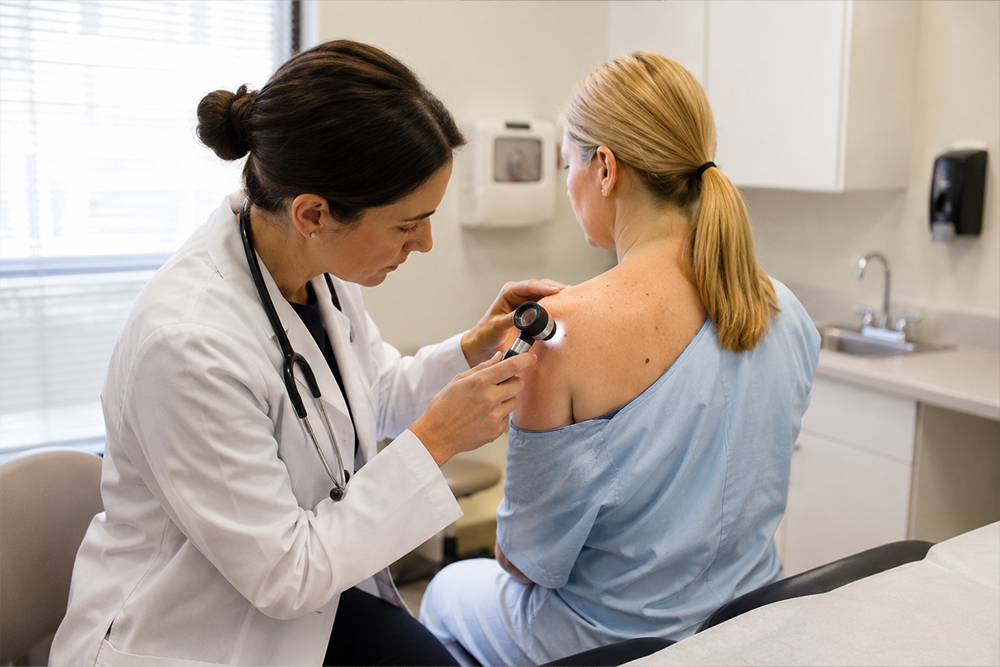
At EPCC, the first step is to examine the lesion and review your medical history. The team may recommend a biopsy, request a pathology review, or decide that further specialist evaluation is needed. The goal is to replace uncertainty with clear information.
What counts as a suspicious lesion?
A suspicious lesion may be new, unusual, changing, bleeding, crusting, painful, or slow to heal. It may appear as a bump, sore, patch, or growth that looks or behaves differently from the surrounding skin.
Some skin cancers develop slowly and may not cause pain at first. That is why a persistent change should be checked even if it does not feel serious.
You do not need to decide whether a lesion is dangerous before making an appointment. If something looks unfamiliar or continues to concern you, that is enough reason to have it evaluated.
The skin cancers EPCC commonly evaluates
EPCC’s skin cancer care mainly focuses on basal cell carcinoma and squamous cell carcinoma. These are the two most common forms of non-melanoma skin cancer.
Both often develop on sun-exposed areas, including the face, ears, neck, scalp, arms, and hands. However, they can behave differently, which is why each treatment plan should be based on the individual lesion rather than a standard approach.
| Skin cancer type | Why evaluation matters |
|---|---|
| Basal cell carcinoma | Usually grows slowly, but it can damage nearby tissue if left untreated. |
| Squamous cell carcinoma | Needs careful review because size, depth, location, and risk level can affect treatment. |
| Melanoma | A serious skin cancer that is evaluated and treated differently from BCC and SCC. |
Basal cell carcinoma, often called BCC, may appear as a shiny bump, pink growth, open sore, or scar-like patch. Although it often grows slowly, it can affect nearby tissue when treatment is delayed.
Squamous cell carcinoma, or SCC, may look like a firm red bump, scaly patch, raised growth, or sore that crusts or bleeds. Its size, depth, location, and other risk features can influence the recommended treatment.
Melanoma is mentioned only briefly here because this article mainly focuses on BCC and SCC, which are central to EPCC’s non-melanoma skin cancer care.
How the care process works
The purpose of an appointment is to help you move from worry to a clear plan. You are not expected to diagnose the lesion or decide which treatment you need.
A typical care pathway may include:
- You contact EPCC with a skin concern or existing biopsy result.
- The team examines the lesion and reviews your health history.
- Biopsy findings, pathology reports, or outside medical records are reviewed.
- The diagnosis is explained in clear, everyday language.
- Suitable treatment choices and follow-up needs are discussed with you.
Some people arrive without a diagnosis and only know that a spot has changed. Others may already have confirmation of basal cell carcinoma or squamous cell carcinoma from another provider.
In either situation, the team begins with the information available and guides you towards the appropriate next step.
Where HDR brachytherapy may fit
For certain basal cell and squamous cell skin cancers, EPCC may consider HDR brachytherapy. HDR stands for high-dose-rate. It is a focused form of radiation treatment delivered close to the affected area.
This approach may allow the care team to treat a defined lesion while limiting unnecessary exposure to nearby healthy tissue. That can be especially important when skin cancer appears on a visible or delicate area, such as the nose, ear, scalp, or face.
HDR brachytherapy is not the right choice for every patient. Suitability depends on the confirmed diagnosis, lesion size, depth, location, previous treatment, overall health, and other clinical details.
The team will explain why this option is being considered and whether another treatment route may be more appropriate. Patients comparing a Cancer Treatment Center in Merced, CA, should look for this kind of individual evaluation rather than a one-size-fits-all recommendation.
Why physician-led care matters
Skin cancer treatment decisions can involve more than treating a visible spot. The medical team may also need to consider surrounding tissue, cosmetic concerns, overall health, and long-term monitoring.
Dr. Alireza Mahmoudieh has been part of El Portal Comprehensive Cancer Centers since 2008. He previously served as Director of the Prostate Brachytherapy Program at Kaiser Permanente in Sacramento and Roseville.
That background supports EPCC’s experience with brachytherapy-based cancer care. For anyone searching for a Skin Cancer Doctor Merced, California, physician-led guidance can provide greater clarity about the diagnosis, available options, and expected follow-up.
What you can expect as a patient
You may arrive with a sore on your nose that has not healed, a rough patch on your scalp, or pathology results from another doctor. Whatever your starting point, the care team works to help you understand your situation.
Support may include reviewing your symptoms and health history, explaining whether the diagnosis is complete, examining biopsy information, and discussing treatment choices in simple terms.
EPCC also provides new-patient guidance so you know what records to bring and what may happen during the first visit. This can be particularly helpful for older adults, caregivers, and families managing appointments, referrals, and medical paperwork.
When comparing an Oncology Clinic in Merced, CA, consider whether the clinic supports the whole process. Good care should connect evaluation, diagnosis, treatment planning, and follow-up rather than leaving you to organize each step alone.
When should you contact EPCC?
Contact the center if you notice a lesion that is:
- New or changing in appearance.
- Bleeding or crusting repeatedly.
- Painful or tender.
- Slow to heal.
- Growing or becoming more raised.
- Different from the surrounding skin.
You can also reach out if you already have biopsy results and need help understanding the diagnosis or possible treatment choices.
So, where can I get skin cancer treatment in Merced, CA? Begin with a medical team that can properly evaluate the lesion, explain the findings, and guide you towards care based on your actual condition.
Start with a clear medical review.
A suspicious spot can create uncertainty, especially when you do not know whether it is harmless or requires treatment. You should not have to work that out alone.
El Portal Comprehensive Cancer Centers helps patients in Merced and the Central Valley move from concern to a clearer diagnosis and care plan. Contact the center to arrange an evaluation and learn what the right next step may be for you.