For many people, the most worrying part of a suspicious skin lesion is the thought of surgery. If a sore will not heal, a patch keeps returning, or a spot begins to bleed and crust, one question often comes up straight away: will this need to be cut out?
In some cases, the answer may be no. For selected basal cell and squamous cell skin cancers, Non-Surgical Skin Cancer Treatment may be possible. At El Portal Comprehensive Cancer Centers, that decision starts with a proper medical review, not a quick assumption about what treatment should be used.
The answer depends on the type of skin cancer
Not every skin cancer is managed the same way. Before a non-surgical option is even considered, the care team needs to confirm exactly what type of lesion is present and how it behaves.
This discussion mainly involves basal cell carcinoma, also called BCC, and squamous cell carcinoma, or SCC. These are the most common non-melanoma skin cancers and the ones most often linked with non-surgical treatment discussions.
| Skin Cancer Type |
Why It Matters |
| Basal Cell Carcinoma |
Often grows slowly, but it can still damage nearby tissue if left untreated. |
| Squamous Cell Carcinoma |
May need closer review because size, depth, and location can affect treatment. |
| Melanoma |
More serious and handled differently from BCC and SCC. |
Melanoma is mentioned only briefly here because this article focuses on BCC and SCC, where non-surgical approaches may sometimes be considered.
What does non-surgical treatment mean?
When people hear the phrase
Skin Cancer Treatment without Surgery, they often imagine avoiding treatment altogether or choosing an easier option. That is not what this means.
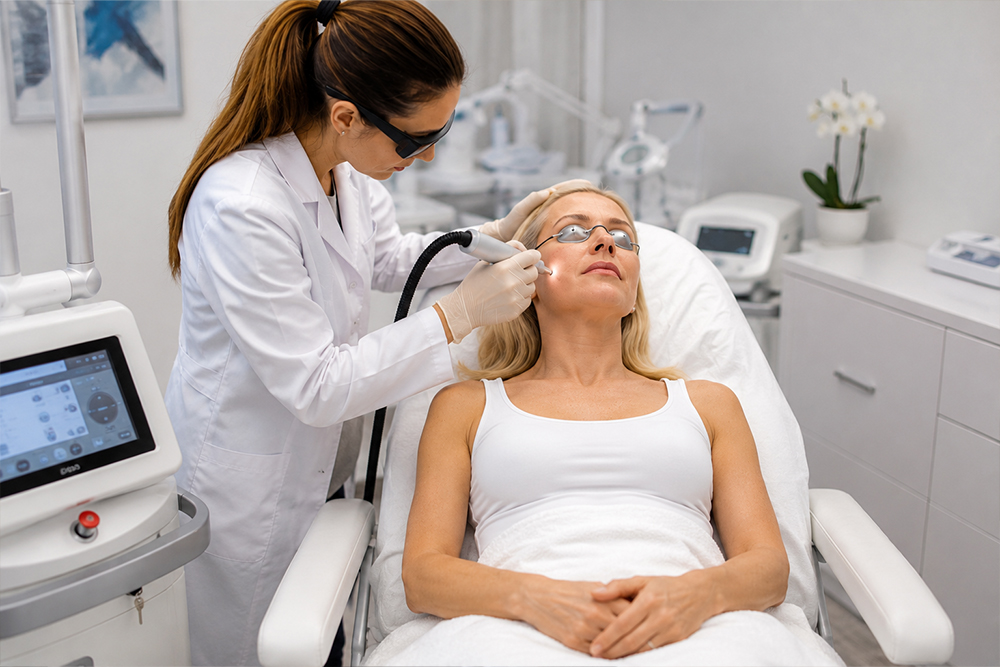
A non-surgical approach still involves real cancer treatment. In selected cases, EPCC may consider HDR brachytherapy, which is a focused radiation treatment planned around the lesion itself. The goal is to treat the cancer while limiting unnecessary exposure to the healthy tissue around it.
This can matter even more when the lesion appears on a visible or delicate area, such as the nose, ear, scalp, or face. In those situations, the treatment plan may need to consider not only cancer control, but also tissue preservation and cosmetic outcome.
What HDR brachytherapy actually is?
HDR stands for high-dose-rate. In simple terms, HDR brachytherapy is a targeted
radiation treatment delivered very close to the treatment area.
It is not used as a blanket replacement for surgery. Instead, it may be considered when the diagnosis, lesion features, and patient circumstances suggest that it could be an appropriate option.
That is why EPCC does not present brachytherapy as something every patient should expect. It is discussed only after the physician’s review of the confirmed diagnosis, lesion location, size, depth, and other clinical details.
How EPCC decides whether it fits
The decision is based on much more than the word “skin cancer.” A lesion may look small from the outside but still needs careful review before any treatment is chosen.
The care team may look at:
- The confirmed pathology.
- Whether the lesion is BCC, SCC, or another diagnosis.
- The size, depth, and location of the affected area.
- Whether the lesion is new, recurrent, or previously treated.
- Overall health, comfort, and follow-up needs.
This is important because two patients with the same cancer type may still need very different plans. The decision depends on the full clinical picture, not only the label attached to the diagnosis.
Why outpatient treatment matters to many patients
For some patients, one benefit of Outpatient Skin Cancer Treatment is that care may fit more easily around daily life. Treatment that does not require hospital admission can reduce disruption to work, care giving, travel, and other responsibilities.
That does not make the condition minor. It simply means care may be delivered in a structured clinical setting with follow-up, instructions, and monitoring built into the process.
This practical side of treatment matters to many older adults, caregivers, and families who are already balancing appointments, transport, and paperwork. A treatment plan should make medical sense, but it should also be realistic for the person living through it.
Why physician experience matters here
A decision about non-surgical treatment should not rest on general marketing language or broad promises. It should come from a physician who understands diagnosis, lesion behavior, treatment planning, and long-term follow-up.
Dr. Alireza Mahmoudieh has been part of El Portal Comprehensive Cancer Centers since 2008 and previously directed the Prostate Brachytherapy Program at Kaiser Permanente in Sacramento and Roseville. That background supports EPCC’s experience in brachytherapy-based care and helps patients understand that the recommendation is being made on medical grounds.
What patients should understand before starting
If a non-surgical approach is being discussed, the patient should leave the consultation understanding a few key points. These include the confirmed cancer type, why brachytherapy is being considered, how the treatment schedule may work, and how the skin will be monitored afterward.
This is especially important for people comparing Early-Stage Skin Cancer Treatment Options and trying to understand whether a less invasive approach may fit their case. The decision is never just about convenience. It is about whether the lesion, diagnosis, and overall situation support that plan safely and appropriately.
When to ask about a non-surgical option
If you notice a lesion that is new, changing, bleeding, crusting, painful, or slow to heal, it is worth having it examined. You can also reach out if you already have biopsy results and want help understanding what treatment options may be appropriate.
So, can skin cancer be treated without surgery? In some basal cell and squamous cell cases, yes. But the right answer only comes after a team has properly reviewed the lesion, the diagnosis, and your overall clinical picture.
Start with the diagnosis, then the right plan
Worry about surgery is understandable, but the first step should never be guessing which treatment you need. It should be getting a clear diagnosis and a medical explanation of what options genuinely fit your case.
El Portal Comprehensive Cancer Centers helps patients in Merced and the Central Valley understand whether non-surgical treatment may be appropriate and what the next step should be.